

The Greensboro City Council’s emergency meeting on September 3 was an unusually tense gathering for a group that had seemed to work well together since taking office last December.
Council members cut each other off mid-sentence, asked tough questions of city staff, leveled thinly veiled threats, and argued over who knew what when.
The source of the tension: the state Local Government Commission had informed Greensboro that it was being placed on its Unit Assistance List, a group of municipalities that no one wants to join.
The commission, part of the state treasurer’s office, monitors the financial health of cities and towns. Being added to its list signals concern about a municipality’s finances. It also triggers a series of restrictions, from requiring the commission’s approval for contracts over $50,000 to mandatory financial education for city or town managers.
How had Greensboro landed on the list, seemingly without warning? Why hadn’t the council been made aware sooner?
The truth, say commission members—including a former Greensboro council member—is that the city should have seen it coming. The same could be said for Rocky Mount, Zebulon, Hope Mills, and Cary, all of which were also added to the commission’s list this year.

The commission had been giving the same financial advice and warnings for years. But it generally gave wider leeway for communities that didn’t follow its guidance, especially larger cities that commissioners felt had the resources to cover their expenses. But after recent and dramatic fiscal problems in Rocky Mount and Cary, the commission has taken a tougher approach.
“Financial concerns should be taken seriously regardless of the size of the local government,” said State Treasurer Brad Briner in a statement last month. “Rocky Mount is a good example of how larger units can benefit from the additional monitoring, oversight, and support that our staff provide” to governments that end up on the list.
Differing Circumstances
In Rocky Mount, the fiscal concerns were obvious. The state came close to taking over the city’s finances after releasing a damning audit of its financial practices in March that found mismanagement of millions in public funds.
“Rocky Mount was within one fiscal quarter of being out of money, like unable to pay bills,” said State Auditor Dave Boliek, an ex-officio member of the nine-member commission, in a recent interview. “They were within three months of not being able to cash a check.”
The city has made progress since March, but the commission added it to the list after determining it needed further monitoring.
Cary’s council asked for the town manager’s resignation last year after finding “over-the-top spending and inadequate financial reporting … lack of transparency with the full council, staff, and citizens, [and] an unhealthy work environment.”
In Zebulon, five departures from its town hall in just six months led to a municipal meltdown. After facing its own scathing report from the state auditor’s office, the town let go of most of its finance department and its longtime finance director announced his retirement. After landing on the list, the town is working with the commission’s coaching team and trying to “strengthen its financial management practices and internal controls.”
In Hope Mills, the town’s longtime finance manager retired in March after a state audit that found a combination of overspending, overreliance on fund balance, mid-year budget amendments to keep certain departments operating, and what town officials admitted was financial mismanagement. The town council voted not to renew the town manager’s contract. The commission will be monitoring all these problems as the town works its way off of the list.

Nothing that dramatic was at play in Greensboro, by far the largest of the cities recently added to the Unit Assistance List this year. The commission explicitly stated that the city appeared to be in healthy financial shape. But it had been warned about the state of its fund balance—essentially the city’s emergency savings account—for years.
As far back as 2021, the commission let the city know it wanted Greensboro to keep a fund balance equivalent to at least 25% of its expenditures. It also warned against using the fund balance for the city’s regular operating expenses. In 2022, when the city’s fund balance was at just above 18%, the council passed a resolution committing to the commission that it would reach 25% by 2030.
“Financial concerns should be taken seriously regardless of the size of the local government.”
Brad Briner, State Treasurer
City staff has repeatedly characterized that as an agreement with the commission—including in last month’s emergency meeting. That’s the understanding city council members were operating under when they passed the latest city budget in June. But both the commission and the treasurer’s office say they never made any such agreement with the city.
“To my knowledge, the LGC doesn’t enter into agreements for a local government to take a certain amount of time to reach a certain benchmark,” said Denise Canada, deputy treasurer of external affairs and secretary of the Local Government Commission. “I think that’s just outside of the way we operate. To the best of my knowledge … it’s much more that Greensboro said, back in 2022, ‘Here’s our plan.’”
The commission exercised a degree of patience with Greensboro over the next four years, as the city seemed to be making progress. Greensboro increased its fund balance to 22.5% and then 23.3% in the two years after announcing its plan. But in the 2024-25 fiscal year, the fund dipped to 22.9%, and the council tapped it to cover spending increases.
“I don’t think that’s something we would have done if we had realized the seriousness of the situation with the LGC,” said Denise Roth, Greensboro’s mayor pro tem and a former Greensboro city manager. “You do have to depend on your staff to communicate to you what is happening. And I think the communication did break down here.”
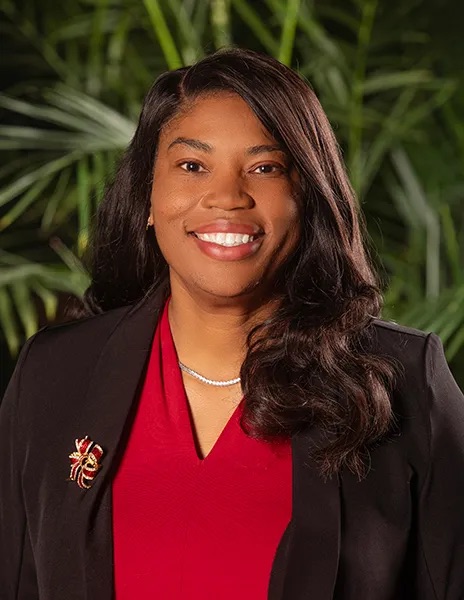
“But wherever that breakdown was, we were off trajectory for three years,” Roth said. “We needed to be on a plan that was reasonable, that was defendable, and that those who have the authority said was justified or justifiable. And so, where we find ourselves is that we’re the third-largest city in the state having an outside agency looking over our shoulder.”
After the LGC added Greensboro to the list this summer, Mayor Marikay Abuzuaiter tried to emphasize the city’s overall financial health. Failing to meet the fund balance guidance was more serious than the city realized, she said, but it did not signal the city’s imminent financial collapse.
Beyond the fund balance issue, the commission has said it considers the city to be on firm financial footing. There shouldn’t be any problem with approving the $41 million in bonds on November’s ballot, Canada said, should they pass. But finding itself under greater scrutiny from the state was a wake-up call, council members said.
“I think we may not have realized all of the details of how they make these recommendations, even some of us who have been on council for many years,” Abuzuaiter said. “I think we do need to take responsibility for that, and I think we are taking responsibility for it. But I think if you asked most people over the years what the right amount of fund balance is, the recommendations have shifted. I do think there has been confusion about that.”
Myths, Money, and Competing Interests
The Local Government Commission doesn’t recognize a specific fund balance percentage requirement for all cities, Canada said. But the idea that 8% was a blanket recommendation was so widespread that the treasurer’s office published an explainer on “The Myth of 8%” back in 2022.
The commission makes its recommendation based on a number of financial factors, Canada said, including the fund balances of cities that are similar in size.
“As in a lot of states, North Carolina has a handful of very large government localities, and then the population falls off significantly,” Canada said. “Population is not the only factor, but it’s certainly part of it. We’re looking at those peer cities. In the case of Greensboro, that includes the largest cities.”
Just over 300,000 live in Greensboro. Its fund balance is now at about 23%. That’s significantly beneath peer cities like Winston-Salem (63%), Durham (46%), and Raleigh (101%).
Cary, a town of 187,000, is also at about 23%. By comparison, Fayetteville, home to almost 212,000 people, is at just over 26%. Wilmington, a city of about 126,000, is at 47%.

Zebulon, which has just over 9,000 residents, has maintained an available fund balance of 75% despite its other financial problems. Hope Mills, which has just over 18,300 residents, has a fund balance of 27%.
“There are a lot of factors,” Canada said.
Some towns and cities are now growing and expanding at rates that exceed the increase in their revenue bases. At about 300,000 people, Durham has been gaining on Greensboro as the state’s third-largest city. Its growth has been more rapid in the last 10 years and, bolstered by the Triangle’s large universities and Research Triangle Park, its median income has increased more quickly.
Not all North Carolina cities operate exactly alike, even if they are similar in size. In Greensboro, for instance, the public libraries are run by the city rather than Guilford County. That’s a county function in most of the rest of the state. Greensboro also finances and runs its own parks, something some cities leave to their counties.
“That’s why these fund balances can be important,” Boliek said in a recent interview. “Because you could have cash flow disruptions. You can also have downturns or unexpected expenses, and so we want to be able to pay the bills. Particularly, we want to be able to pay your municipal bond payments, and in addition to that, clearly you want to be able to pay folks who come to work every day as civil servants serving the community.”
Some have accused Boliek, a Republican, of targeting Democratic towns and cities with audits. He’s pushed back on that, saying these financial problems were on the radar of the auditor’s office well before he took over last year.
“Where we find ourselves is that we’re the third-largest city in the state having an outside agency looking over our shoulder.”
Denise Roth, Greensboro Mayor Pro Tem
Nancy Hoffmann retired from the Greensboro City Council in 2025 after 14 years in office and was then reappointed to the Local Government Commission. Hoffmann, a Democrat, has served on the commission since 2021. The commission’s recent moves aren’t politically motivated, she said. It may be painful in the short term, she said, but the commission putting more teeth into its recommendations will ultimately help municipalities.
“Isn’t the rule of thumb in our personal budgets that we should have savings to cover three months of our expenses?” Hoffmann said. “In essence, I think that’s what the 25% fund balance is.”
Maintaining that level of available fund balance can be difficult, Hoffmann said, because of competing interests. City council members are constantly trying to maintain or even expand city services while trying to avoid unpopular increases in taxes or service fees. She felt the tension during her own time on council, she said.

In her time working in the textile business, Hoffmann said, she had to plan for reducing expenses—down to which positions would be eliminated—should revenues take a downturn or expenses grow. In the current inflationary environment, Hoffmann said, municipalities should be taking a similar approach. But that’s not always easy.
“There are a lot of competing interests,” Hoffmann said. “No one wants to reduce services. You don’t want to say no to more police officers, more firefighters. You don’t want to say we can’t grow this department.”
In smaller cities, those competing interests can lead to trouble much more quickly, Hoffmann said. But the commission hasn’t done larger cities any favor by allowing them to drag their feet on or even ignore sound financial guidance under the theory they are too large to really fail.
“I think having this guidance, whether it’s more education for new city staff and leadership or getting serious about fund balance goals, is ultimately a good thing,” Hoffmann said. “As a city council, you really have to be a board of directors. If you know whether your goals are and you know they’re important, you can direct your staff to where you know you need to be.”
The cities on the list are all actively working with the commission to get off of it. That will mean reaching certain benchmarks.
In Zebulon, that means the town’s new finance team will work with the commission’s coaching team to establish, and stick to, new financial controls.
In Greensboro’s case, it will mean shoring up its fund balance, budgeting in a way that does not draw it down, and maintaining clean annual audits. Last month, Greensboro met with an external firm, the first step in getting an independent review of its financial situation, an assessment of city government structure, and a 30-, 60-, and 90-day response. The city is already identifying spending cuts, including eliminating rather than filling empty positions.
“They’ve told us what we need to do and we’re doing it,” Abuzuaiter said. “We always welcome any kind of needed oversight. And if this is what the LGC staff believes that we need at this point, then of course, we want to do what we can to get off of that list as fast as we can.”
Paul Woolverton, senior reporter with CityView, contributed to this report.
